Carbon accounting depends on high-quality underlying data. But before source data can support a greenhouse gas inventory, it often requires significant preparation.
The information organizations need is distributed across utility records, procurement systems, travel data, supplier files, operational systems, and spreadsheets designed for entirely different business purposes. It rarely arrives properly structured to kick off the carbon accounting process.
That means sustainability teams often spend substantial time standardizing files, mapping fields, resolving data quality issues, and translating operational data into the structure required for emissions calculations.
Today, we’re introducing Persefoni Data Agent, a new agentic experience in the Persefoni platform designed to make that workflow more efficient.
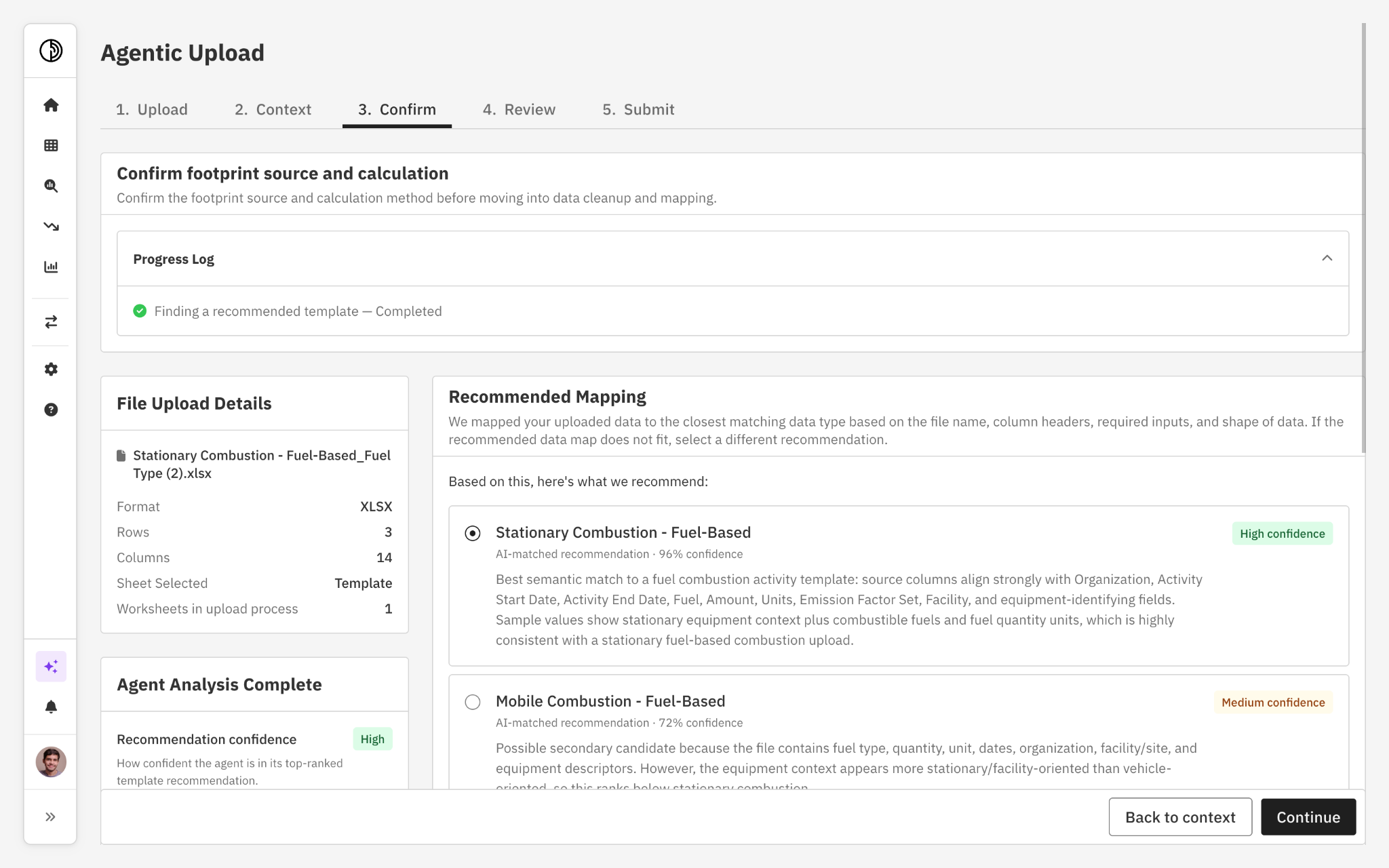
Rather than manually restructuring data before uploading it into the platform, teams can bring source data directly into Persefoni and use AI-assisted recommendations to help interpret the file, map fields, flag potential issues, and prepare the data for calculation.
The goal is to make it easier to move from raw business data to a structured, reviewable dataset for carbon accounting, with less manual preparation along the way.
Source data rarely begins in a carbon accounting template
Standardized templates are useful for creating consistency. But the underlying data generated across an enterprise rarely follows a single structure.
A procurement extract may contain thousands of transactions. Energy data may be organized differently across facilities or geographies. Supplier names may vary across systems. Units, date formats, and field structures can all differ.
Historically, sustainability teams have had to resolve these differences before data can enter the carbon accounting workflow.
Persefoni Data Agent is designed to support that work directly in Persefoni.
When source data is uploaded, the platform can recommend the appropriate data structure and suggest how source columns should map to fields within the Persefoni platform. Users can then review, modify, and approve those recommendations before submission.
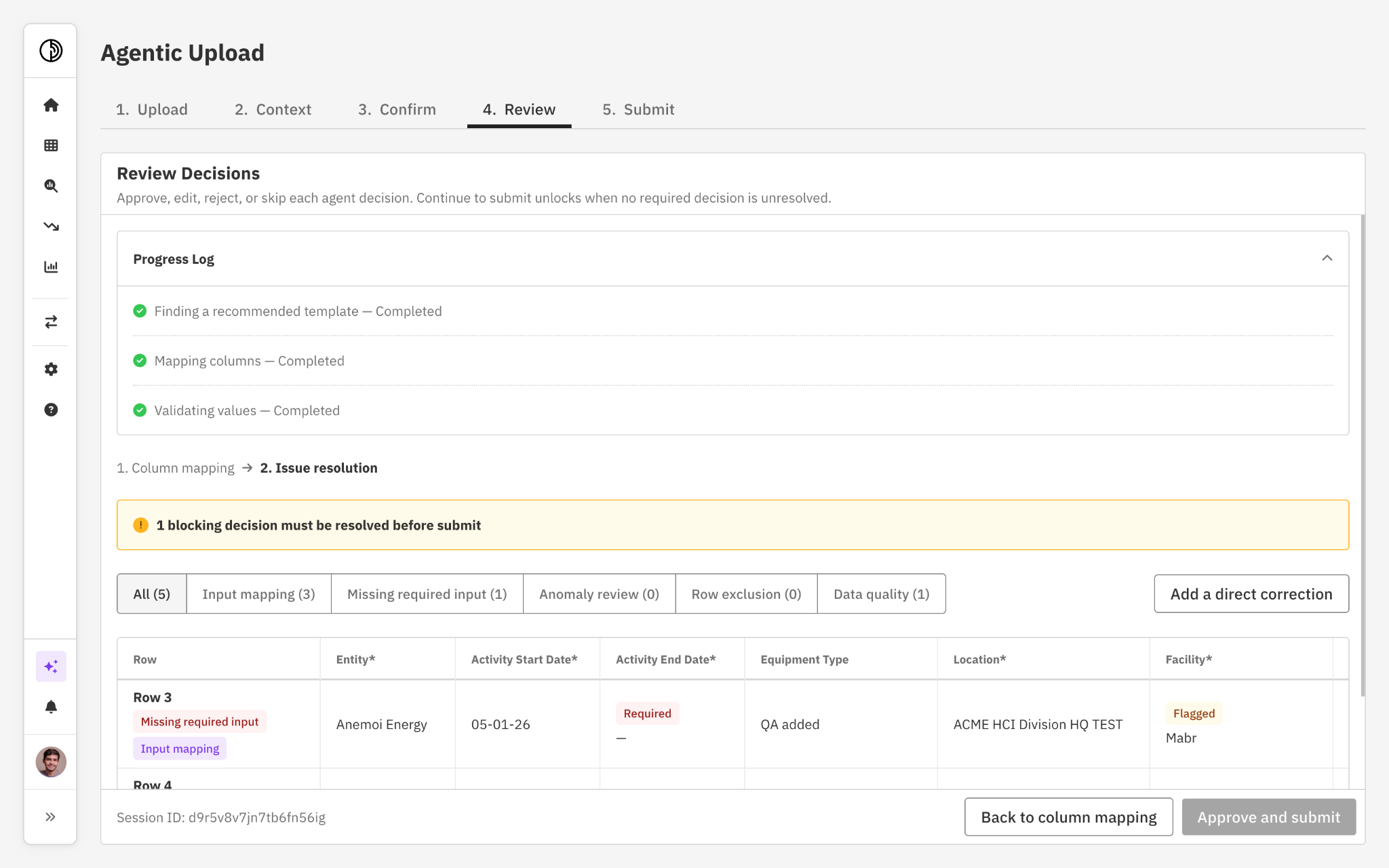
The agentic workflow can also surface potential data quality issues, such as inconsistent units or dates that do not align with the intended reporting period, so they can be addressed before the data is incorporated into the inventory.
This allows teams to spend less time manually restructuring files and more time reviewing the assumptions and decisions that may affect the quality of the final inventory.
AI-assisted preparation, with human review and auditability built in
Data preparation for carbon accounting is not simply a technical or mathematical exercise. It often requires human judgment.
The appropriate treatment of a data field may depend on the reporting period, source system, organizational boundary, or intended calculation methodology. Those decisions also need to remain transparent and reviewable.
Persefoni Data Agent is built to assist with these decisions while keeping users in control of the final treatment. Users can provide relevant context about the source data, review AI-generated mapping recommendations, adjust suggested fields, and approve how identified issues are resolved before data is submitted.
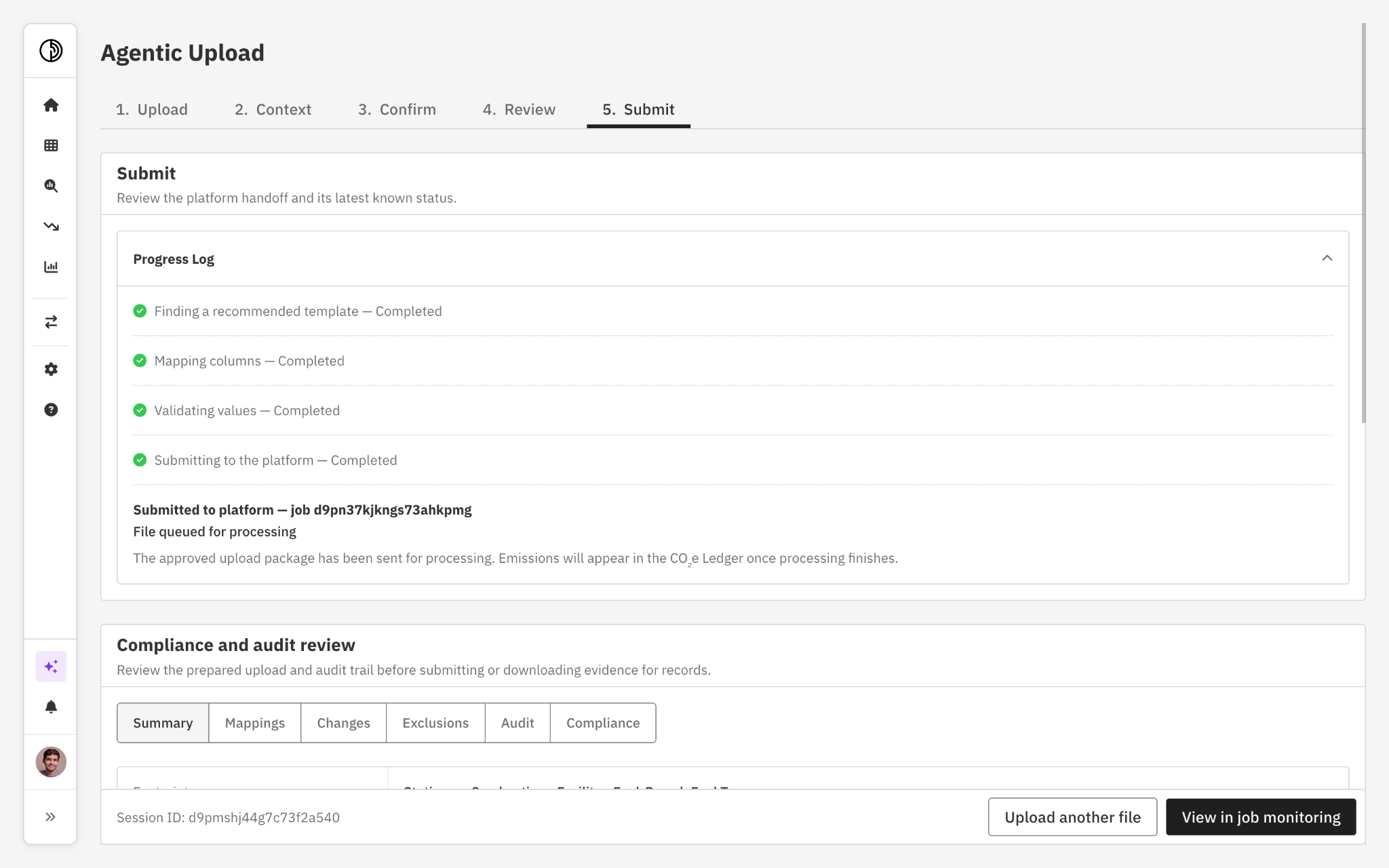
A downloadable decision log records AI-assisted recommendations made during the workflow, providing a clearer record of how the source data was prepared. For organizations managing recurring inventories, that documentation can also help maintain consistency from one reporting cycle to the next.
This becomes especially useful for complex datasets, such as those on purchased goods and services. A single procurement file can contain thousands of transactions, inconsistent supplier names, different classification structures, and records that require different treatment for emissions accounting. Persefoni Data Agent helps teams work through those data issues within the platform, while preserving the context and decisions behind how the data was prepared.
Putting agents to work across sustainability workflows
Persefoni Data Agent is part of a growing suite of agents designed to take on more of the work across sustainability and carbon accounting workflows.
It works alongside Persefoni Sustainability Agent, formerly Persefoni Copilot, a GPT-based on-demand assistant that helps users get answers about the Persefoni platform and tap into sustainability and carbon accounting expertise.
And the suite is continuing to grow. We’re developing new agents to support comprehensive sustainability reporting and product carbon footprinting (PCF), bringing agentic AI into more of the work sustainability teams manage every day.