

Understanding Scope 3 Emissions Categories
Updated:
January 20, 2026
·
[Read Time]
Because Scope 3 emissions span a wide range of activities across an organization’s value chain, the GHG Protocol (GHGP) organizes Scope 3 emissions into 15 distinct categories. These categories provide a standardized framework for identifying, calculating, and reporting indirect emissions in a consistent and comparable way.
The 15 Scope 3 categories are grouped into upstream and downstream emissions based on where they occur in relation to the reporting company.
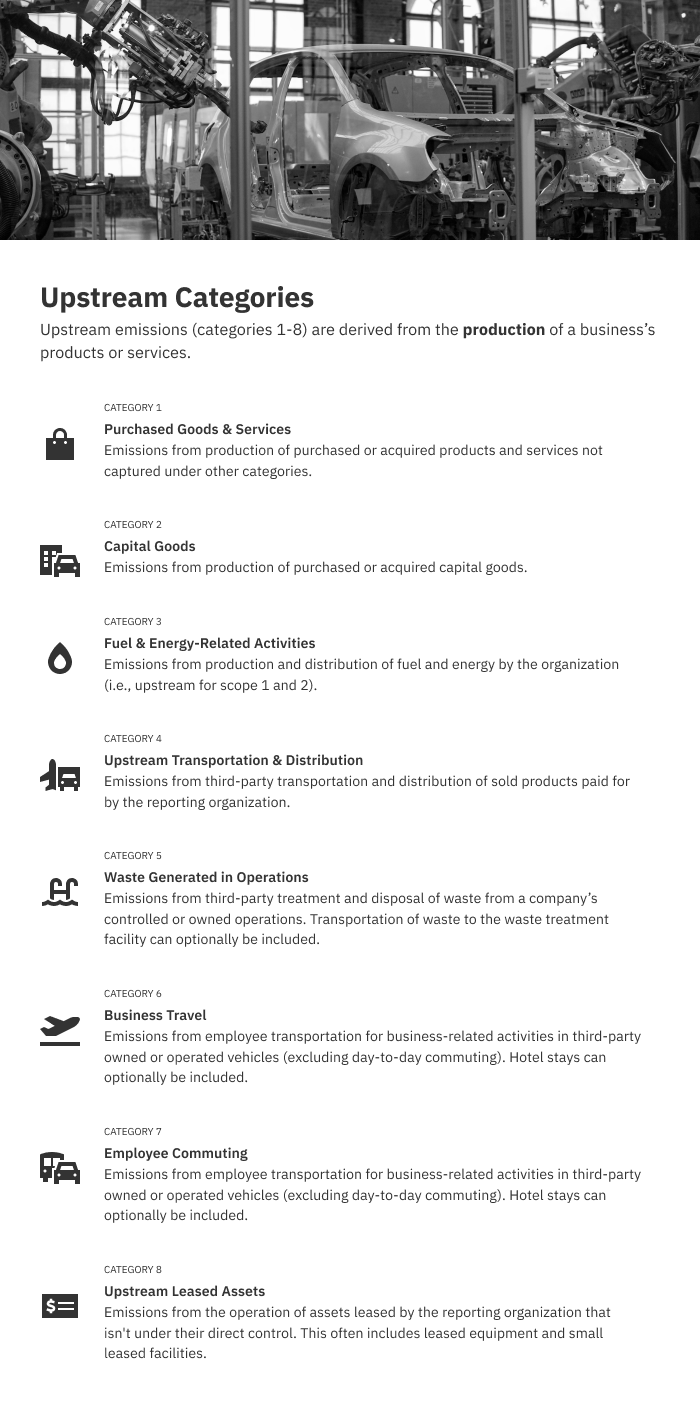
Upstream emissions are associated with activities that occur before a product or service reaches the reporting company. These typically relate to the acquisition and processing of purchased goods and services and include activities such as raw material extraction, manufacturing by suppliers, and upstream transportation.
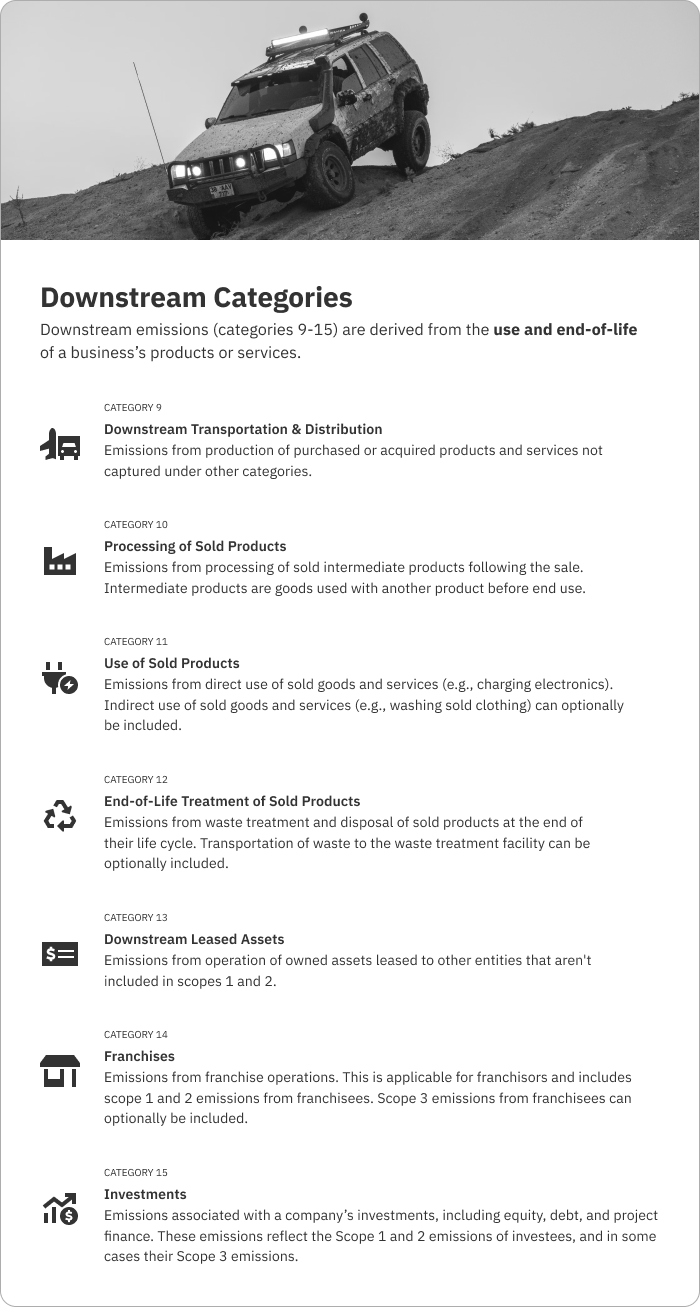
Downstream emissions are associated with activities that occur after a product or service leaves the reporting company. These include distribution, storage, product use, and end-of-life treatment, as well as emissions associated with leased assets and investments.
The Scope 3 categories are designed to:
By defining these boundaries, the categories help prevent double counting within a single organization’s Scope 3 inventory. However, it is important to note that double counting across different companies in a value chain is expected and acceptable, as the same emissions may be reported by multiple organizations for different reporting purposes.
Understanding how Scope 3 emissions are categorized helps organizations identify where emissions occur, prioritize data collection, and build a complete and defensible Scope 3 inventory aligned with the GHG Protocol.

