

Implementing Reduction Strategies
Updated:
January 13, 2026
·
[Read Time]
CDP’s 2021 Global Supply Chain Report states that scope 3 emissions are, on average, 11.4x higher than operational emissions. However, only 41% of companies that disclosed to CDP in 2022 reported Scope 3 emissions.
Furthermore, even though purchased goods and services (scope 3 category 1) emissions are relevant for most industries, only 36% of companies reported these emissions.
Reducing emissions is critical to any comprehensive sustainability strategy for businesses. Some practices for organizations to consider when mitigating Scope 3 emissions, including for purchased goods and services, include:
1. Product Design and Innovation - Innovative and intentional product and packaging design can reduce emissions using fewer materials and less energy consumption during production and transportation. Additionally, designing an easily repairable product extends its lifespan and reduces the likelihood of ending up in a landfill. You can also encourage suppliers to adopt similar product design practices and innovations to reduce emissions.
2. Local Sourcing and Transportation Optimization - Intentionally sourcing materials from local suppliers and consolidating shipments reduces the overall emissions from transportation.
3. Renewable Energy Integration - Encourage suppliers to use renewable energy during production. This transition can significantly reduce emissions from goods and services and other emission sources within the scope 3 value chain.
4. Performance Monitoring and Reporting - Companies should engage in internal and external oversight to maintain momentum from effective reduction strategies. Internal management can look like evaluating the data collection process as needed, while external control may involve periodical auditing of supplier performance and compliance. Organizations should also provide transparent reports on emission reduction progress.
5. Waste Management - Companies should audit their business operations and adopt waste reduction and recycling programs to minimize waste throughout their supply chain and product lifecycle. Additionally, companies can reduce paper waste by opting for digital systems over paper waste.
In Module 4, Lesson 1, Agora identified purchased goods and services as one of its scope 3 emission hotspots. Using the four considerations above to develop a strategy, Stephanie identifies a correlation between the opportunities and reduction strategies from emissions associated with purchased goods and services.
With the following information, Stephanie is well-prepared to present strategies and next steps to her leadership team.
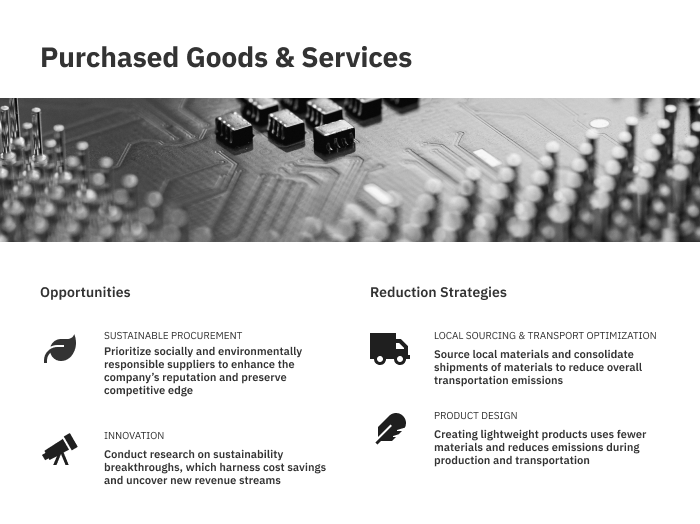
Implementing reduction strategies for purchased goods and services is a multifaceted approach that involves innovative collaboration, sustainable sourcing, and continuous monitoring. By embracing the above considerations, businesses can contribute to global emissions reduction efforts, enhance environmental performance, and drive positive change throughout their supply chain.
As organizations adopt these strategies, they demonstrate commitment to sustainability and ultimately position themselves as leaders in a more sustainable future. In the next module, we’ll discuss how to take your scope 3 mitigation strategy to the next level by aligning with broader calculation and reporting frameworks.

