

Selecting a Calculation Methodology
Updated:
January 13, 2026
·
[Read Time]
As organizations identify relevant emissions sources and compile business activity data (such as fuel consumed, dollars spent, or miles traveled), they gain clarity on what data is available and which calculation methods are feasible. Selecting from multiple calculation methods allows organizations to use available data today while improving data quality and methodologies over time.
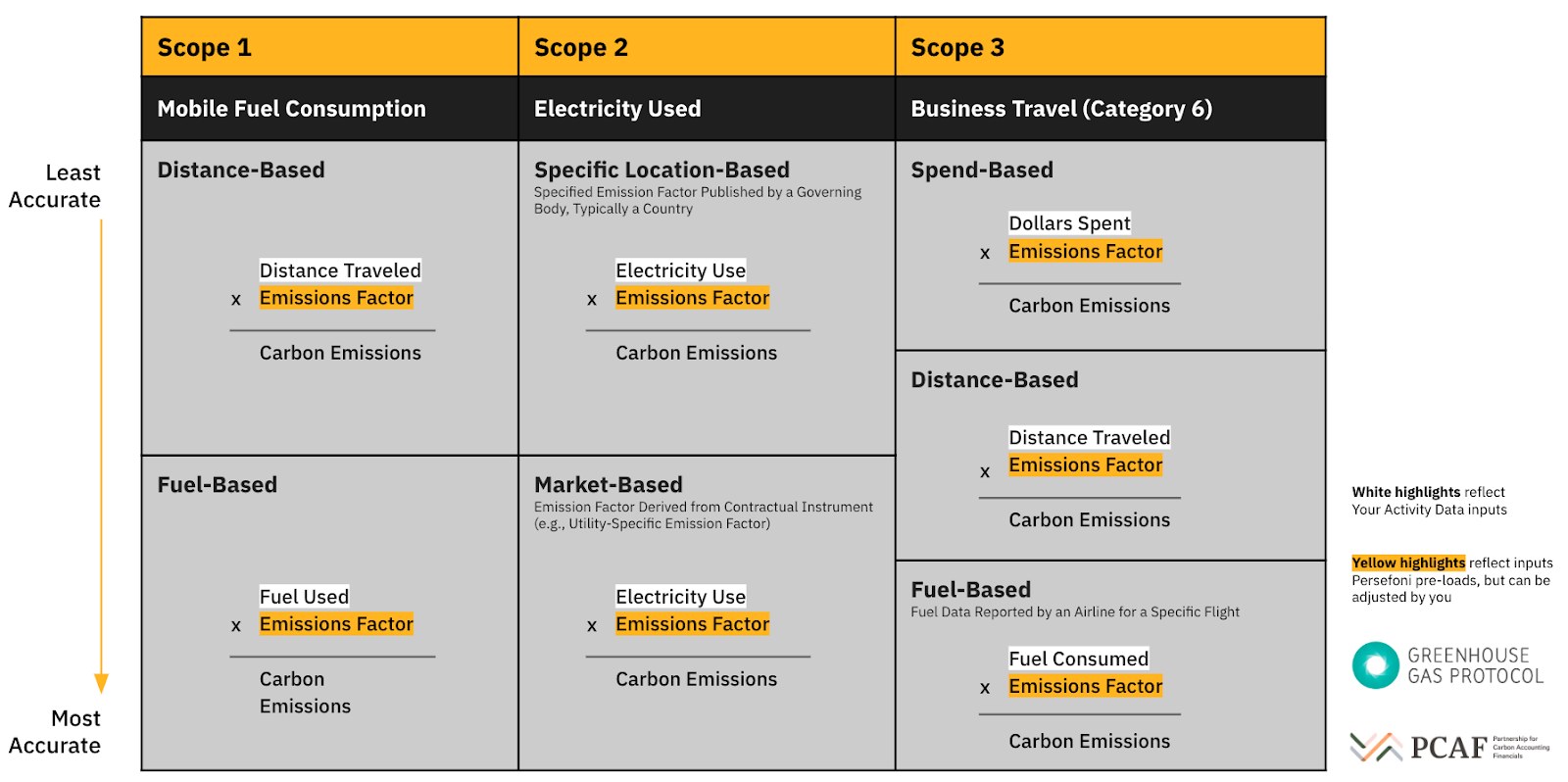
The table below provides examples of different calculation methods across Scope 1, 2, and 3 emissions. In general, methods that rely on more specific activity data tend to produce more accurate emissions estimates, while methods requiring less detailed data are often easier to implement. As a result, there is typically a tradeoff between data availability, effort, and accuracy.
Spend- or distance-based methods are often appropriate starting points for organizations in the crawl stage. As data quality improves and processes mature, organizations may adopt more granular methods to improve accuracy where feasible.
Step 1: Do you have supplier-specific or activity-specific data?
Yes → Use a supplier-specific or activity-based method (e.g., hybrid or direct calculation).
No → Move to Step 2.
Step 2: Do you have detailed activity data (e.g., distance, quantities, energy use)?
Yes → Use an activity-based method (distance-, fuel-, or energy-based).
No → Move to Step 3.
Step 3: Do you have reliable spend (financial) data?
Yes → Use a spend-based method (commodity or industry average).
No → Use secondary data and assumptions to establish a baseline.
Step 4: Is this category a significant contributor to your total footprint?
Yes → Plan to improve data quality over time by engaging suppliers and replacing estimates with more specific data.
No → Maintain the current method and revisit as priorities change.
For example, when estimating emissions from employees traveling to quarterly offsites, Agora must select a calculation method based on available data. The organization may have access to the amount spent on travel, the distance traveled, or, in some cases, fuel consumption data.
In selecting a method, Agora considers:
Based on the data selected, Agora may use one of the following calculation methods:
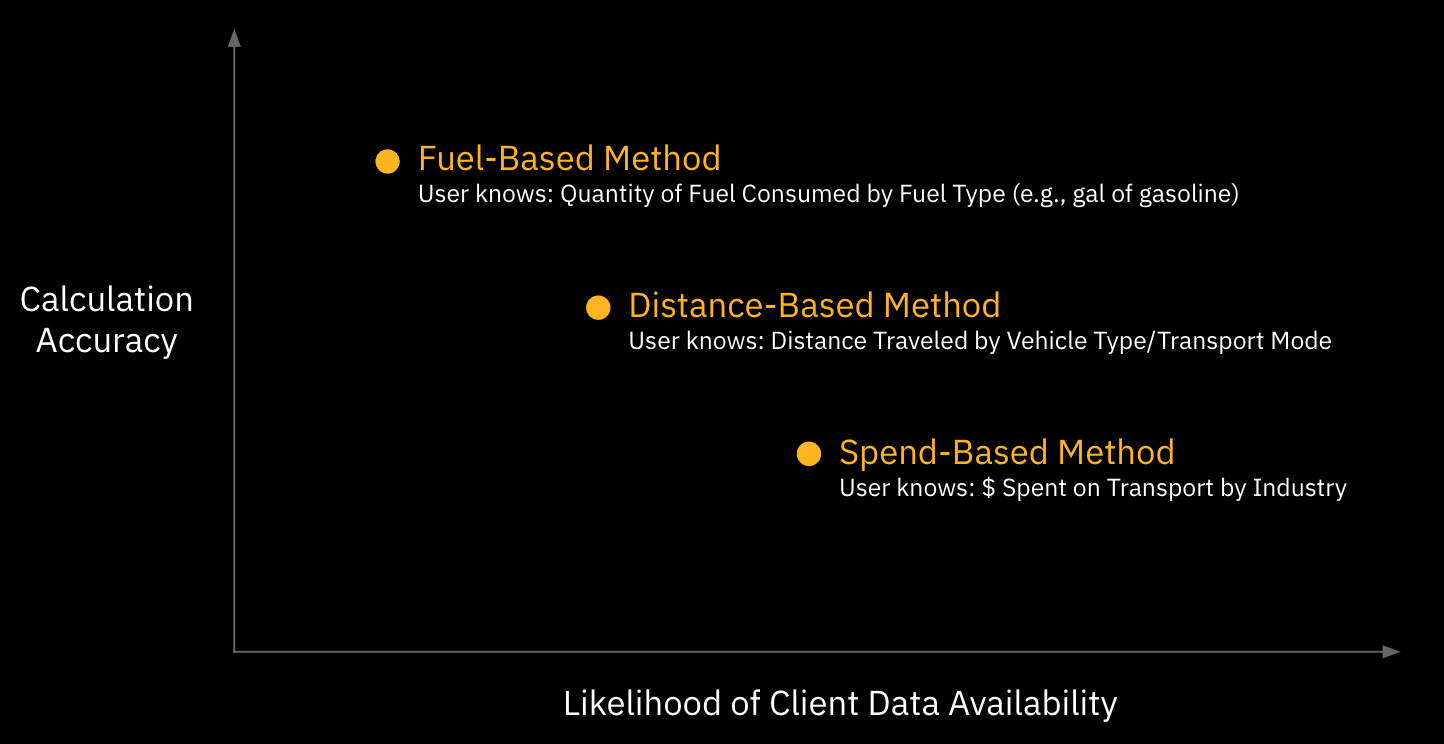
Agora recognizes that higher-quality activity data supports more accurate emissions calculations, which in turn enables more meaningful insights and more effective decarbonization strategies.

