Academy
Scope 3 101
Scope 3 Measurement Principles

The Crawl, Walk, Run Approach

Updated: 
January 13, 2026
  ·  
[Read Time]

Overview

Because Scope 3 emissions span complex and often global value chains, organizations are not expected to achieve perfect data or comprehensive coverage immediately. Instead, a crawl, walk, run approach allows organizations to make progress at a manageable pace while steadily improving data quality, coverage, and impact over time.

Calculating Scope 3 emissions is an iterative process. It takes time for organizations, and their suppliers, to build the systems, capabilities, and confidence needed for more advanced measurement and reduction efforts. A phased approach helps establish a credible starting point while creating space for long-term improvement and commitment.
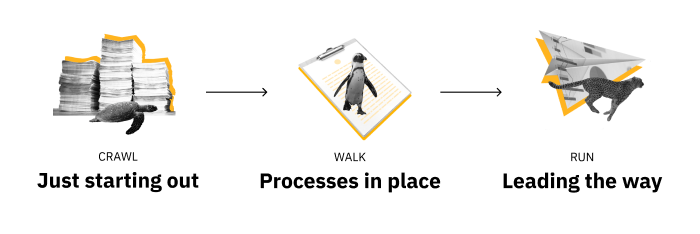
scope 3 journey

Below is a high-level overview of what this journey typically looks like in practice.

Crawl: Just Starting Out

At this stage, organizations are focused on building a foundation for Scope 3 accounting.

Key activities often include:

  • Defining business and climate ambitions
  • Establishing organizational and operational boundaries across the value chain
  • Assessing which Scope 3 categories are relevant and likely material
  • Starting with high-level calculation methods, such as spend-based approaches, using data that is already available
  • Identifying preliminary emissions hotspots or areas of greatest risk to guide future data collection efforts
  • Investing in a climate management and accounting platform to support data organization and calculation

The goal of the crawl stage is not precision, but visibility. Understanding where emissions are likely to occur and where to focus next.

Walk: Established and Effective Processes in Place

As processes mature, organizations move toward more accurate and decision-useful Scope 3 data.

At this stage, organizations typically:

  • Use more precise calculation methods for significant emissions sources, supported by carbon accounting software
  • Identify which Scope 3 categories contribute most to the overall footprint
  • Evaluate and refine emissions reduction strategies, including those related to suppliers and products
  • Commit to carbon reduction targets that include Scope 3 emissions, where appropriate

The walk stage is about improving confidence in the data and beginning to connect measurement with action.

Run: Leading the Way

In the run stage, organizations are using Scope 3 data to drive meaningful change across their value chain.

Common characteristics include:

  • Measuring all significant emissions sources using the most granular data feasible
  • Actively engaging suppliers and value-chain partners to support emissions reductions, often starting with the largest emitters
  • Using tools that facilitate supply chain carbon reporting, including no-cost options for suppliers, such as Persefoni Pro, to reduce barriers to participation
  • Integrating Scope 3 insights into procurement, product design, and strategic decision-making

At this stage, Scope 3 accounting supports not just reporting, but transformation.

Lesson takeaway

No matter where an organization is in its carbon accounting journey, progress is possible. By taking a phased approach and leveraging the right tools and technology, Scope 3 accounting becomes more approachable, more manageable, and more impactful over time.

Sections
Up Next
Methodologies for Calculating Scope 3 Emissions
Understand how emission factors and calculation methods are applied across Scope 3 categories and why different activities require different approaches.