

What Data to Collect
Updated:
January 13, 2026
·
[Read Time]
To calculate Scope 3 emissions, organizations rely on two primary types of data. Understanding the difference between these data types—and how they are used together—is foundational to building a credible and scalable Scope 3 inventory.
Primary data comes from specific activities or suppliers within an organization’s value chain. This data reflects actual conditions at a facility, supplier, or activity level and typically provides the highest level of accuracy.
Examples of primary data include:
Primary data is especially valuable for material Scope 3 categories, as it enables more precise emissions calculations and supports actionable insights for reduction strategies. However, collecting primary data often requires deeper supplier engagement and more mature data-sharing processes.
Secondary data consists of emissions information derived from industry averages, proxy datasets, or third-party databases that are not specific to an individual supplier or activity. Secondary data is commonly used when primary data is unavailable or incomplete.
Secondary data is typically combined with activity data, such as:
This combination allows organizations to estimate emissions in a consistent and defensible way, particularly in the early stages of Scope 3 accounting or for less material categories.
While secondary data is generally less precise than primary data, it plays a critical role in ensuring completeness and coverage across the value chain and provides a practical starting point for organizations beginning their Scope 3 journey.
Most organizations use a mix of primary and secondary data when calculating Scope 3 emissions. A common approach is to:
The following tables illustrate examples of primary and secondary data across the Scope 3 categories, highlighting where different data types are most commonly applied.
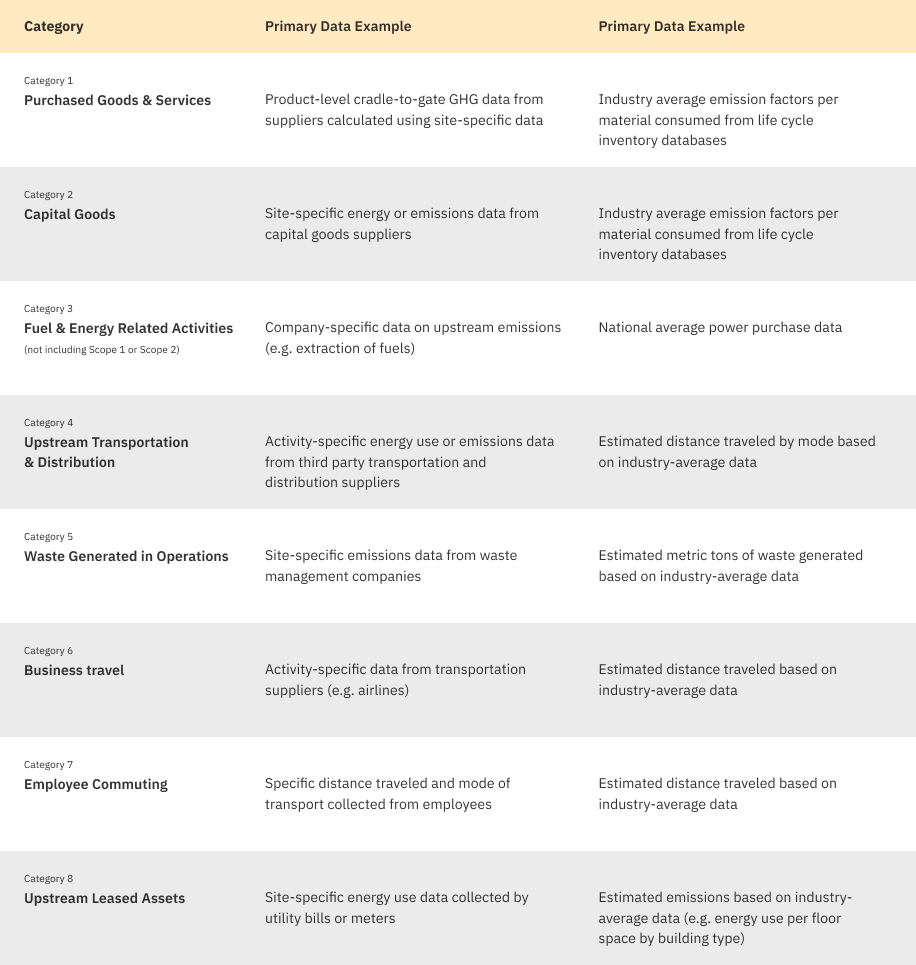
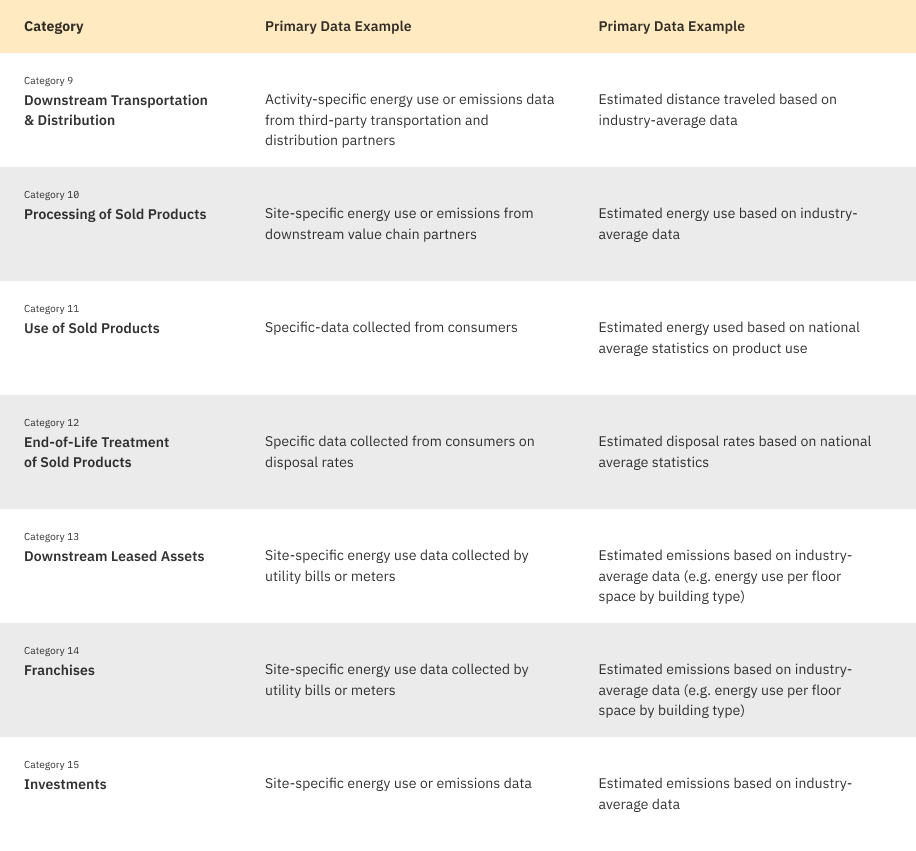
It is critical to engage suppliers throughout the data collection process because Scope 3 emissions occur outside an organization’s direct operations. As a result, organizations depend on upstream and downstream partners to improve data quality and gain more accurate insight into value-chain emissions.
Supplier engagement enables organizations to:
Not all suppliers will have emissions data available initially—and that is expected. Organizations can rely on secondary data where needed while encouraging suppliers to develop greenhouse gas inventories as part of a longer-term improvement strategy.
The next lesson explores practical approaches for collecting data from suppliers and other value-chain stakeholders.
Effective Scope 3 accounting depends on understanding when and how to use primary and secondary data. By combining these data types thoughtfully and improving data quality over time through supplier engagement, organizations can build Scope 3 inventories that are both practical and decision-useful.

