In a turbulent regulatory environment, CDP remains a key driver of climate transparency and a source of decision-useful information for investors. Reliable emissions data is the cornerstone of CDP reporting, and the right carbon accounting software can greatly streamline the process.
If you’ve received a climate disclosure request through CDP, you’re in good company. Last year, more than 22,000 organizations from around the world submitted CDP disclosures.
Originally known as the Carbon Disclosure Project, CDP runs a voluntary international sustainability reporting framework that provides investors, customers, and other stakeholders with information about the environmental performance of companies around the world.
One of the most critical (and challenging) components of CDP disclosure is carbon emissions measurement. Carbon accounting software offers a solution, allowing organizations to manage complex emissions data and report to CDP with confidence.
Below, we provide an overview of the features you should look for when selecting software for CDP reporting, along with a list of the leading tools available today.
How does CDP reporting work?
Stakeholders request data from reporting companies.
CDP allows customers and investors to formally ask companies to disclose their environmental data. The organization now works with more than 700 financial institutions representing $142T USD in assets.
When you receive a request through CDP, you respond by filling out online questionnaires about issues like climate, deforestation, water security, and biodiversity. CDP reviews your completed questionnaires and assigns a score, largely based on the thoroughness and transparency of your answers. CDP then shares its evaluation with the stakeholder who requested the disclosure. You will also see your score and have the chance to identify areas for improvement. Emissions data is one of the core elements of the CDP questionnaire.
.png)
What is CDP reporting software?
CDP reporting software automates carbon accounting.
CDP reporting software helps calculate a company’s greenhouse gas emissions in preparation for voluntary climate disclosure. Historically, many organizations have relied on spreadsheets to track their emissions, which can lead to miscalculations and impede real-time data-sharing by different teams. By automating calculations, CDP carbon accounting software facilitates internal collaboration and ensures data is reliable, transparent, and audit-ready.
What features should I look for in CDP reporting software?
Transparency, CDP alignment, streamlined user interface.
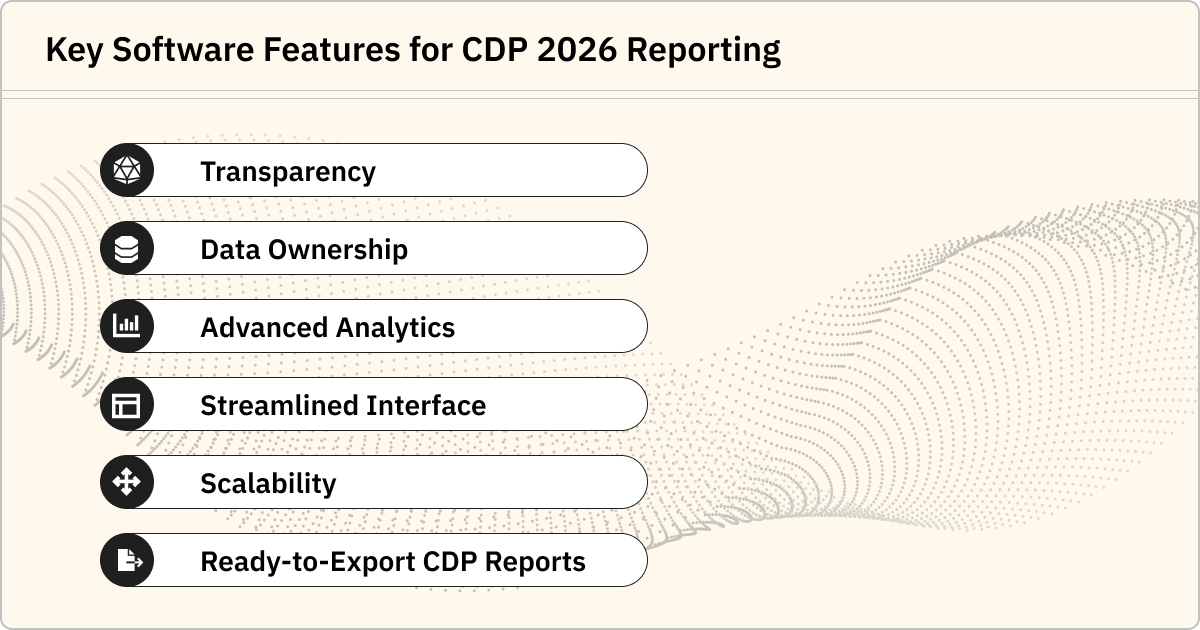
While automated software has become a must-have for efficient and reliable CDP reporting, not all platforms offer the same features. There are several key elements you should look for in your software. These include:
1. Transparency
Software that offers full visibility into your data will set you up for stronger reporting. Ideally, you’ll be able to easily trace data and see the accounting frameworks, formulas, emissions factors, and other components that were used to provide your footprint. You should be able to explain how you arrived at a calculation or why numbers have changed from one year to the next.
2. Ownership of Data
By maintaining control over methodology decisions (like which emissions factor to apply in a calculation), you’ll be better equipped to stand behind the data you report. You should have access to data logs that show when information is added, modified, or deleted, and who made the change. Look for a platform that provides full ownership and control over your data and decision-making.
3. Advanced Analytics & Benchmarking
The best software will go beyond minimum compliance requirements and support your progress on sustainability. Features to look for include AI-powered insights to detect anomalies and identify decarbonization opportunities, industry benchmarking that allows you to compare your performance with peers, and visual dashboards for real-time emissions tracking.
4. Streamlined User Interface
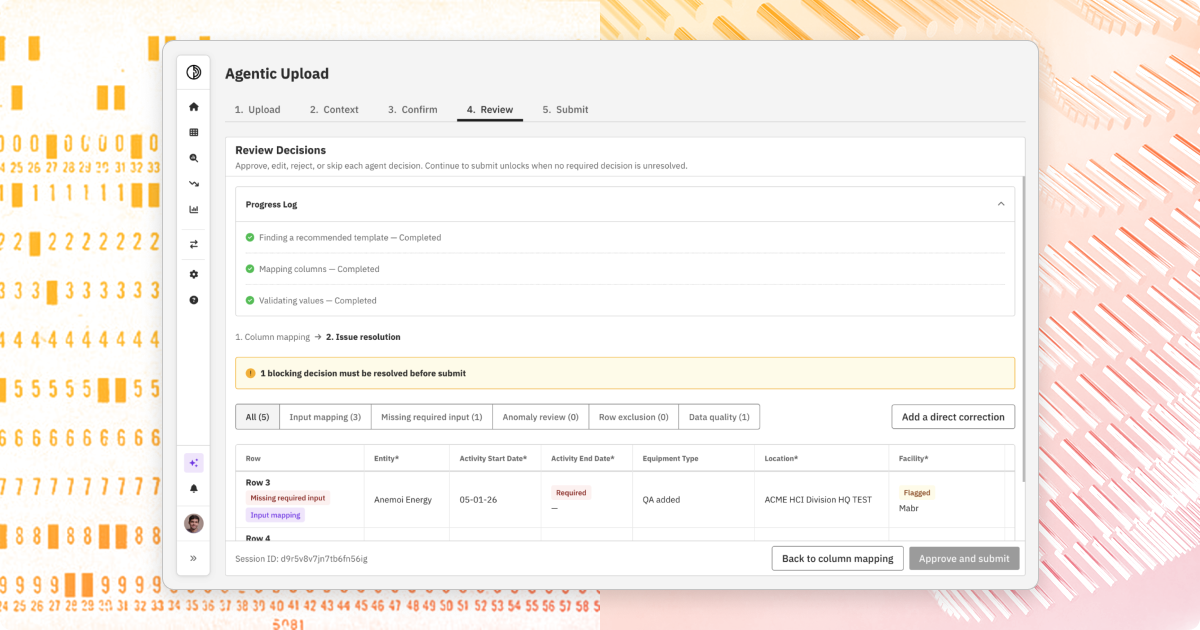
The best CDP reporting software will cut through the complexity of calculating emissions. Stakeholders with no prior carbon accounting experience should quickly be able to enter data and start calculating their carbon footprints. Look for a platform that provides guidance on issues like determining which emissions are material and understanding where to find carbon data. You should make sure the software offers strong customer support to help you navigate any roadblocks.
5. Scalability
Climate disclosure is a journey, and your CDP disclosure will likely get more robust with time. Look for software that will scale with you and handle increasingly granular and comprehensive data, including scope 3 and activity-based data, with ease.
6. Ready-to-Export CDP Reports
You should be able to generate metrics reports tailored specifically for the CDP questionnaire. Ideally, the software will allow you to create reports for other leading disclosure frameworks like California’s SB 253 and Europe’s Corporate Sustainability Reporting Directive.

The 5 Best CDP Reporting Software in 2026*
*Based on Persefoni’s assessment of the carbon technology reporting landscape today.
Preparing your CDP report can be time- and resource-intensive, especially if you’re just getting started. Enterprise-ready carbon accounting software with the features above can help streamline the process substantially. As you choose your product, it’s helpful to ask questions like:
- How well does it integrate with the latest CDP questionnaire?
- How much transparency and data ownership does it offer?
- How accessible will it be for members of your team (or value chain) with varying levels of technical carbon accounting expertise?
To help you get started, here’s a roundup of five leading software platforms for 2026 CDP reporting:
1. Persefoni
Persefoni was built for climate disclosure, enabling users to generate GHG metrics reports specifically for CDP. The platform is sophisticated enough to handle complex data and meet rigorous reporting requirements. As your disclosure needs grow, Persefoni will scale with you. In addition to CDP, you can generate audit-ready reports for frameworks like California’s SB 253, Europe’s CSRD, UK’s SECR, and ISSB-aligned regulations. When you’re ready for more robust scope 3 data, you can share Persefoni directly with your suppliers to facilitate data exchange.
Persefoni’s interface is user-friendly and includes guidance to help navigate common reporting roadblocks. For example, you can get tailored recommendations for determining the materiality of emissions and finding data within your organization—two challenges that tend to slow teams down. In addition to the easy interface, one of the features that sets Persefoni apart is its expert support team (one client referred to it as “hands down, the best I’ve encountered in any industry”). If you’re prioritizing ease of use, advanced analytics, and audit-grade, ready-to-export CDP reports, Persefoni is a strong choice.
Get started with Persefoni today.
2. IBM Envizi
IBM’s Envizi ESG Suite is integrated into IBM’s asset management tools, including IBM Maximo and IBM TRIRIGA. Envizi offers centralized management for scope 1, 2, and 3 emissions data. It includes CDP-aligned templates and workflows and automates the application of GHG Protocol-aligned emissions factors and calculations. Envizi also provides alignment with other frameworks like TCFD and GRI. In addition to supporting disclosure, Envizi offers tools to help companies with their decision-making and decarbonization strategies. Its dashboards and analytics enable users to track sustainability performance and monitor progress against science-based emissions targets. Envizi is ideal for organizations that are already invested in the IBM ecosystem and want a CDP reporting solution that integrates with other IBM offerings.
3. SpheraCloud
Sphera specializes in Environment, Health, Safety & Sustainability (EHS&S), Operational Risk Management (ORM), product stewardship, and supply chain transparency. Its software, SpheraCloud Corporate Sustainability, complements the company’s ESG consulting services. SpheraCloud Sustainability is designed to align with the CDP questionnaire as well as the GHG Protocol and TCFD framework. The software provides enterprise-grade data security and governance, scope 1, 2, and 3 emissions calculations, and audit-ready reporting features ideal for companies with complex, multi-site operations. SpheraCloud is a good option for users looking for support developing their decarbonization strategies in addition to CDP disclosure.
4. Normative
Normative is geared towards helping small businesses calculate their carbon footprints. It offers alignment with both the GHG Protocol and the CDP questionnaire, along with robust support for managing scope 3 emissions and engaging supply chain partners. Normative calculates the full spectrum of carbon emissions across complex value chains, while its team of experts is available to guide users through disclosure frameworks (including CDP and CSRD). Users will have access to exportable summary reports of their emissions by scope, along with a view of industry benchmarks. Normative boasts a streamlined interface that allows teams with a wide variety of carbon accounting experience to engage and navigate reporting requirements. Normative is a strong choice if you’re a small business looking for consulting support in addition to emissions calculations for CDP reporting — after using the carbon calculator, you can connect directly with Normative’s climate strategy team for help designing your sustainability strategy.
5. Sweep
French company Sweep is a sustainability management and reporting solution focused on collaborative emissions management. It allows users to track carbon emissions across their organizations and within their value chains. Sweep’s customers range from enterprise and mid-market organizations to financial institutions. Sweep offers the ability to visualize emissions in a central space, leverages AI for advanced data analytics, and includes features that enhance auditability. Sweep is well-suited for businesses that need to track emissions across teams.
A foundation for confident disclosures
Your CDP reporting will likely grow more robust and comprehensive with time. It’s important to start with a software solution that will allow you to manage increasingly granular and complex data. As the sustainability disclosure landscape evolves, it’s also helpful to establish CDP data management processes that will allow you to respond to a variety of future disclosure demands. Credible carbon data lays a foundation that will help you disclose with confidence—and manage the financial risks and opportunities arising from climate change.
Learn more about how Persefoni can streamline CDP reporting for your company.
FAQs
What level of technical expertise is required to use CDP reporting software effectively?
It depends on which tool you select. There are several platforms that were built specifically to make carbon accounting easy for users with little to no experience. For example, Persefoni uses generative AI to support and educate teams who are new to carbon accounting. Because of this in-platform support, different functions within an organization can work independently to enter data and generate comprehensive emissions profiles. Users can access the Persefoni Knowledge Base, Persefoni Academy, and Persefoni Copilot (an embedded GPT-style interface) for self-service support throughout the onboarding process. A user-friendly interface also helps engage external parties. Businesses can share Persefoni with suppliers as a way of gathering granular value chain data, while investors can use it to collect information from their portfolio companies.
What types of data are needed to use CDP reporting software effectively?
Data requirements will vary depending on the software, but they typically include energy consumption, transportation habits, waste generation, and other relevant activities that contribute to your carbon emissions. Some tools may also integrate data from industry benchmarks or public databases. The most comprehensive footprint calculators will build emissions profiles as much as possible based on actual activity rather than industry averages and spend-based estimates.
Are there any regulatory requirements or standards that CDP reporting software should adhere to?
The CDP questionnaire integrates principles from frameworks like the Greenhouse Gas Protocol, International Sustainability Standards Board (ISSB), and Taskforce on Climate-related Financial Disclosure (TCFD). Ideally, your software will offer the ability to easily export CDP-aligned metrics.
Are there limitations on the size or scale of organizations that can effectively use CDP reporting software?
Some CDP reporting software is designed specifically for smaller businesses or companies that operate in a single country. Others, like Persefoni, are available to companies of any size, including those with operations in multiple countries and jurisdictions. These flexible tools enable smaller suppliers from around the world to enter their emissions data using the same consistent methodology as their larger customers — facilitating high-quality scope 3 calculations and transparent communication.


.png)