

The Process of Collecting Data
Updated:
January 13, 2026
·
[Read Time]
Module 3 highlights strategies for collecting business data from internal and external upstream and downstream stakeholders. We will cover the importance of having complete and accurate data. In this module, you will:
Estimated time to complete is20 min.
When collecting scope 3 data, engaging and working with internal and external partners, such as procurement, operations, logistics, audit, and IT teams, is crucial.

Because Scope 3 emissions can span dozens of activities and hundreds of suppliers, organizations should avoid attempting to collect highly detailed data for all categories at once. Instead, the GHG Protocol recommends prioritizing data collection efforts based on a combination of materiality, feasibility, and strategic relevance.
Organizations should prioritize Scope 3 data collection using the following criteria:
This prioritization helps organizations focus effort where better data will deliver the greatest value, rather than spreading resources thin across less material activities.
Once priority Scope 3 categories and activities are identified, organizations determine which types of data are available and appropriate to use. The GHG Protocol distinguishes between two primary data types:
Organizations commonly use a mix of primary and secondary data, starting with what is readily available and increasing data specificity over time.
We’ll explore these data types in more detail in the next lesson.
After selecting data types, organizations begin collecting information from internal systems and external partners.
Primary data may be obtained through:
For priority Scope 3 categories, organizations often engage suppliers and other value-chain partners to request site-specific or activity-specific data, improving accuracy and traceability.
Where primary data is unavailable or incomplete, organizations should use secondary data to fill gaps. When selecting secondary data sources, best practice is to prioritize:
Using consistent and transparent secondary data sources ensures that estimates are defensible and comparable across reporting periods.
Scope 3 data collection is inherently iterative. Organizations are not expected to have perfect data in the first year of reporting. Instead, they should continuously assess and improve data quality as systems, supplier engagement, and internal processes mature.
Organizations can evaluate data quality both:
To maximize impact, organizations should prioritize data quality improvements for activities that are both:
Focusing improvement efforts on these areas helps organizations progressively replace estimates with more accurate, supplier-specific data, strengthening the credibility and usefulness of their Scope 3 inventory over time.
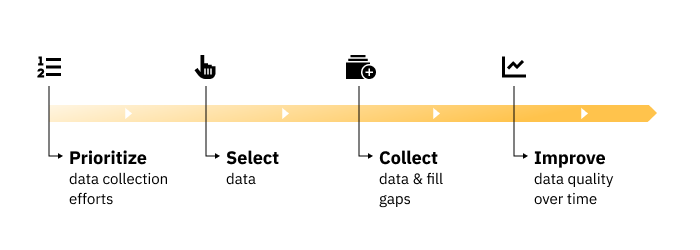
Effective Scope 3 data collection requires prioritization, flexibility, and continuous improvement. By focusing on the most material emissions sources, using a mix of primary and secondary data, and improving data quality over time, organizations can build a Scope 3 inventory that is both practical and decision-useful.

